We provide accurate positioning; a fundamental parameter for all survey and engineering operations at sea.
Request Consultation
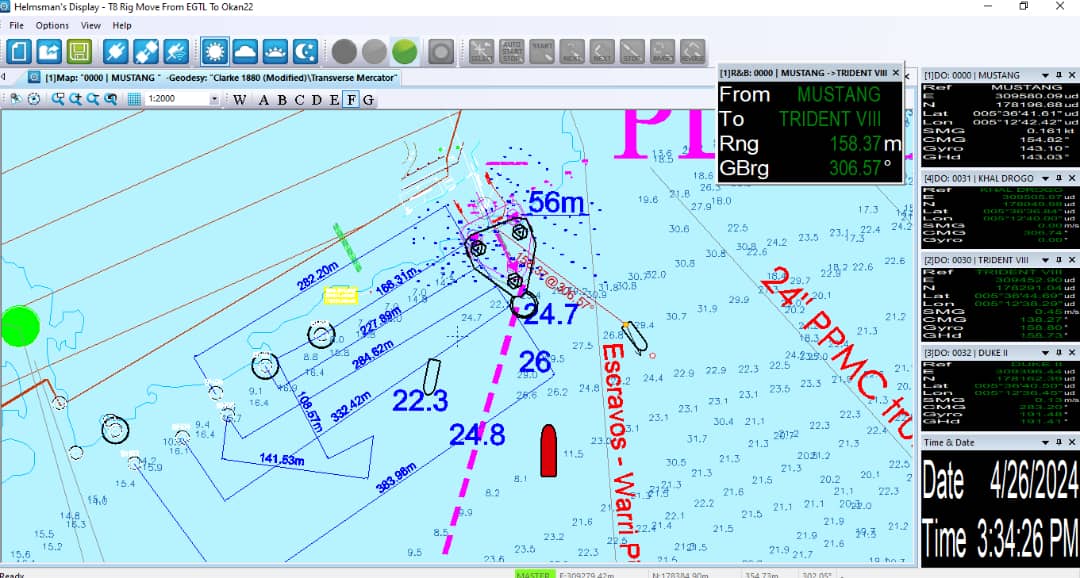
Our experienced team of specialists have completed numerous positioning projects ranging from shallow to deep water rig operations and developed advanced and robust survey and positioning solutions to support all offshore rig and mooring operations.
At 4000m depth, engineers face unique challenges that require specialized solutions. The pressure at this depth reaches approximately over 100 bar (or 10 MPa), which is roughly over 100 times the atmospheric pressure at sea level. Our team of experts are job ready to get things done despite any conditions.
Moving a rig safely and smoothly requires real strength, precise preparation, and solid expertise. Subsea100 has a proven track record of excellence in offshore drilling, rig movements, the successful deployment of high- quality lead, and supporting tugs in moving across ocean areas. We make certain that our activities are carried out in accordance with all regulatory standards.
We provide accurate positioning; a fundamental parameter for all survey and engineering operations at sea. Our experienced team of specialists have completed numerous positioning projects ranging from shallow to deep water rig operations and developed advanced and robust survey and positioning solutions to support all offshore rig and mooring operations.
We provide positioning and survey support for rigid and lexible pipe lay installation operations, along with jacket and deck installations. We provide integrated solutions of USBL (ultrashort baseline), Gyro USBL, LBL (long baseline), and/or INS (inertial navigation system) depending on the type of pipe, lexible pipe, or platform/jacket installation, either in shallow or deep water. We specialize in positioning and navigation services for lay barges during pipe/cable lay operations, as well as AHT management. We support the entire pipeline laying process, from developing an appropriate route to positioning surface vessels, monitoring the pipeline's touchdown point, executing post-lay surveys, and reporting on the results.
.jpg)
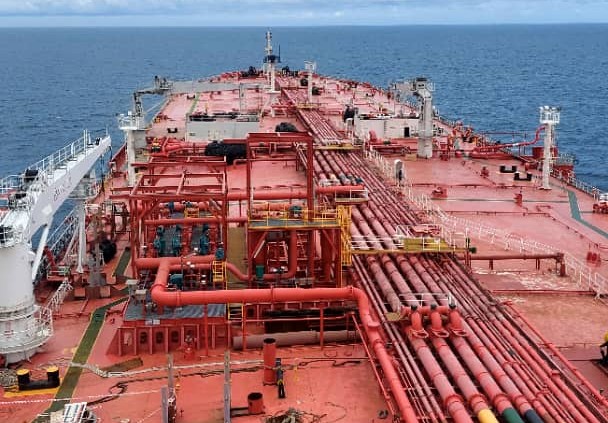
We distinguish ourselves by our extensive understanding of mooring design and offshore mooring operations. We offer a comprehensive solution that includes engineering, mooring design, procurement, and installation, as well as maintenance and decommissioning. We understand how important it is for your FPSO and FSO units to be installed, moored, and operated smoothly and reliably. Uptime and predictability are critical. With effective solutions for on-vessel mooring, riser pull-in, and of loading, we assist clients manage the offshore installation and operating phase of their FPSOs and FSOs.
Other key services include:
INS utilizes accelerometers and gyroscopes to calculate position changes through dead reckoning. Modern systems incorporate fiber optic gyros (FOG) or ring laser gyros (RLG) for improved accuracy.
Advanced Application: Hybrid systems combining INS with acoustic positioning provide continuous high-frequency updates from the INS, corrected periodically by the more accurate but lower-update-rate acoustic system.
DVLs use the Doppler effect to measure velocity relative to the seabed or water column. When integrated with INS, they significantly improve position accuracy during periods between acoustic fixes.
High-precision pressure sensors provide accurate depth measurements, essential for 3D positioning. Modern sensors can achieve resolution better than ±0.01% full scale, equating to approximately ±10cm at 4000m depth.
| Technology | Typical Accuracy at 1000m | Update Rate | Advantages | Limitations |
|---|---|---|---|---|
| LBL Acoustic | ±0.1-0.5m | 0.1-1 Hz | High accuracy, not affected by water depth | Requires seafloor infrastructure, high setup time |
| USBL Acoustic | ±5-10m | 0.5-5 Hz | Simple deployment, vessel-mounted | Accuracy decreases with depth |
| INS | 0.1% of distance traveled | 100+ Hz | High update rate, self-contained | Position drift over time, requires aiding |
| DVL | ±0.2-1% distance traveled | 1-10 Hz | Accurate velocity measurements | Requires proximity to seabed, typically less than 500m range |
| Pressure Sensors | ±0.1-0.5m | 1-10 Hz | Accurate depth measurement | Measures only vertical component |